

How to Build a Positive Math Classroom Culture (Without Relying on Games & Gimmicks)
If you search "how to build classroom culture in math," you'll find plenty of advice—but most of it is really advice about how to make a single lesson more fun: themed days, math games, flipped videos, real-world word problems. At The Number Lab, we don't use any of these as a strategy, and we'd argue you shouldn't rely on them either. They're aimed at capturing attention in the moment, not at shaping how students think about themselves as learners—and mistaking one for the other is why so many "engaging" math classrooms still struggle with anxiety, disengagement, and shallow discussions.
This post breaks down why fun-focused strategies fall short of building real math classroom culture, and walks through a daily routine—Community Conversations—that's designed to build it directly.
What Do We Mean by "Math Classroom Culture"?
Classroom culture is the set of shared beliefs and habits that shape how students engage with hard problems and with each other: Do they believe struggle is normal? Do they feel safe being wrong out loud? Do they listen to a classmate's idea as carefully as they'd listen to the teacher's? Do they see themselves as capable of "doing math," or as someone who's "just not a math person"?
None of that is built by a single engaging activity. It's built the same way any culture is built: through repeated, consistent experiences that reinforce the same values over time.

Why "Make Math Fun" Strategies Don't Build Culture on Their Own
Popular engagement tactics—themed days, math jokes, gamified apps, real-world word problems —are aimed at capturing attention in the moment. That's a fine goal, but it's a different goal from building culture, and treating it as the same thing creates two problems:
They treat symptoms, not root causes. A fun warm-up can make ten minutes fly by without ever addressing why a student is quiet in group work: because they're anxious about being wrong, or they've never been taught what a fixed vs. growth mindset even means.
They don't compound. A themed "Fraction Friday" doesn't build on the themed day before it. Each one is a fresh burst of novelty rather than a deepening of a shared idea. Culture requires repetition and continuity—the same few core truths revisited again and again—not a constant supply of new gimmicks.
A Daily Routine That Builds Culture Directly: Community Conversations
Instead of trying to make each day's math content more entertaining, a Community Conversation is a short, purposeful discussion—just 5 to 7 minutes—that replaces typical circle time or calendar time at the start of math block. The goal isn't entertainment. It's to directly and repeatedly build the mindsets and habits that make reasoning, collaboration, and productive struggle possible.
Example topics that build a strong math classroom culture over time:
Learning isn't magical: Students explore the idea that learning happens because of things they do (talking, listening, asking questions), not because of innate talent.
The Learning Pit: Normalizing the feeling of being stuck as a necessary part of getting to real understanding, rather than a signal to quit or feel embarrassed.
Growth mindset and self-talk: Unpacking the beliefs behind a growth versus fixed mindset, and helping students see they have a choice in how they approach a hard problem.
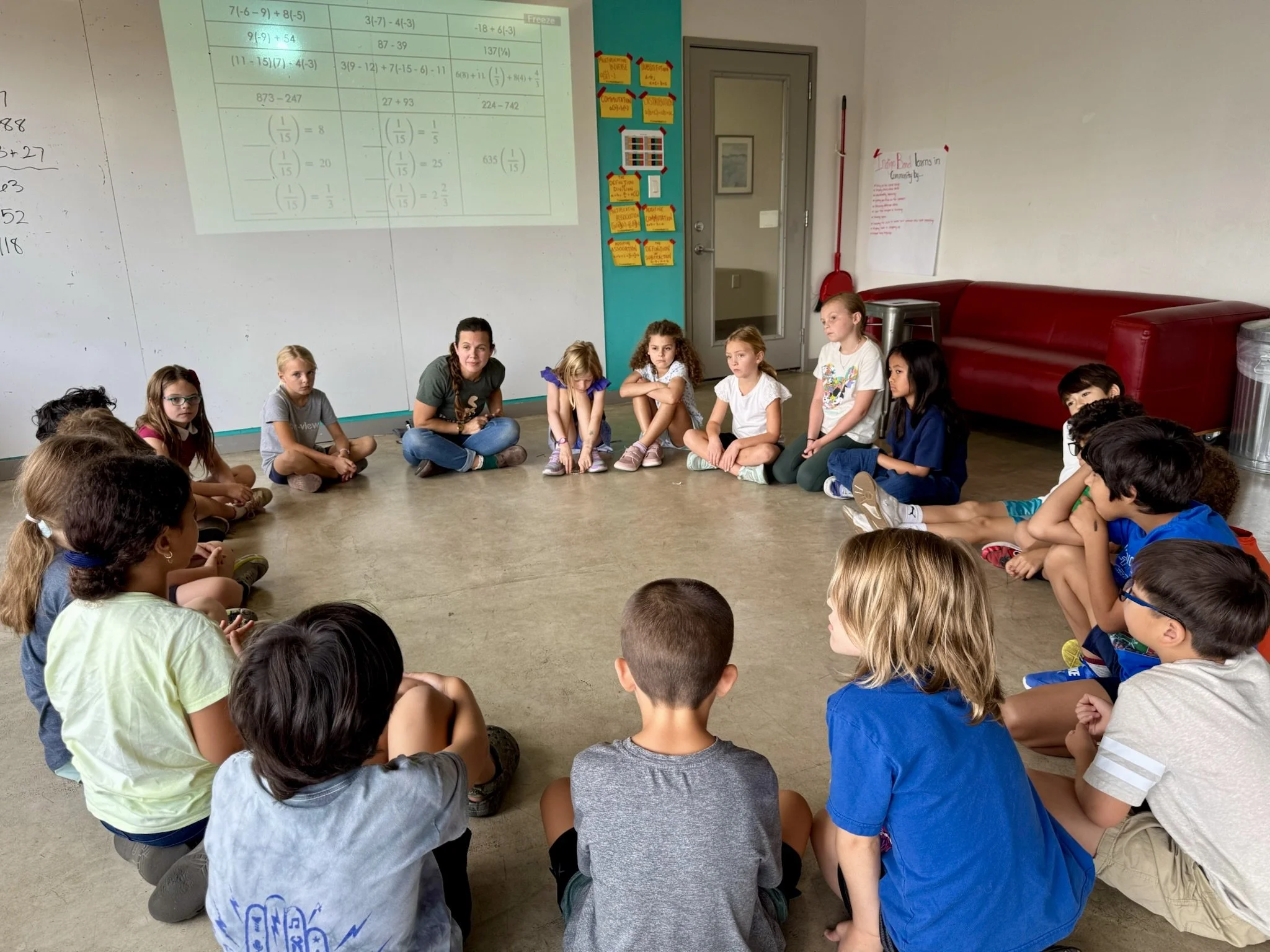
These conversations require almost no prep. What they require is consistency: returning to the same core ideas—you have to talk, you have to listen, you have to ask questions, you have to earnestly seek understanding—until they become the water the classroom swims in, not a one-off lesson.
How to Extend Classroom Culture Beyond the Conversation Itself
A single conversation won't shift culture on its own—you'll need to revisit these ideas from different angles throughout the year, and tie them back into daily instruction. A few ways to do that:
End class with a quick huddle. Gather everyone and ask what they noticed that day related to the morning's conversation: Did anyone take an intellectual risk, or give a partner good wait time?
Give public feedback that reinforces the language you used. Something as simple as, "I noticed Eliot and Eira working hard today to use what we talked about this morning," ties the conversation directly to real classroom behavior.
Frequently Asked Questions
What is a Community Conversation?
A Community Conversation is a short, 5–7 minute discussion that replaces typical circle or calendar time at the start of Math Block. Instead of covering math content, it builds the mindsets and habits—like growth mindset, productive struggle, and active listening—that make real math learning possible.
How is building classroom culture different from making math fun?
Fun strategies like themed days or gamified apps capture attention for a single lesson, but they don't compound over time. Classroom culture is built through repeated, consistent routines that reinforce the same core beliefs—like the idea that struggle is a normal part of learning—day after day.
How much time does building classroom culture take each day?
Just 5 to 7 minutes. The Community Conversations routine is designed to require almost no prep—the key is consistency, not novelty.
The Takeaway
Math is fun—but not because of a themed day or a gamified app. It's fun the same way any discipline is fun once you're actually inside it: when students experience math as a beautifully connected field built on reasoning, not a pile of disconnected procedures to memorize, and when the culture around them makes it safe to explore, question, and get stuck along the way. That kind of fun isn't something you add on top of math class—it's what happens naturally once the culture and the mathematics are both taken seriously. Building math classroom culture, a few minutes a day, all year long, is how you get there.
Want to see this in practice?Watch the Community Conversations playlist or grab free lesson plan samples to try your first Community Conversation this week.