Math Classroom Design: A Culture-First Approach to Learning Spaces
Most conversations about improving math instruction start with curriculum: better problems, better pacing, better assessments. At The Number Lab, we think classroom design is an untapped lever. At our micro-school, Long-View, we started somewhere else entirely—with the room itself. Before you can change what happens in a math classroom, you have to change what the classroom tells students about what kind of work happens there.
As designer David Kelley puts it: "Space is the foundation for the expression of our cultural values." And whether we mean to or not, students feel that. "Consciously or not, we feel and internalize what the space tells us about how to work."
So we treated our classrooms not as a facilities project or a branding opportunity, but as a lever for learning. This is the same lens we bring to every school we work with at The Number Lab: environment and culture first. Here's what we valued, what we built, and what we'd never do again.
Start Math Classroom Design With What You Value
Before touching any furniture, we named our values out loud:
We value "we" spaces more than conventional "I" spaces
We value collaboration and community over individual performance
We value participation over passive consumption
We value creativity, flexibility, and openness
We want students comfortable while doing genuinely challenging work
Every physical decision that followed traced back to one of these.
Two Goals That Drive Our Math Classroom Design
1. Nourish a proactive stance toward learning. The room needed to belong to students, not the teacher. That meant no teacher desk, no "Mrs. ____'s Room." We equalized status by refusing to make the teacher physically central—learning is central, not the adult in the room. We resisted over-decorating: no themed bulletin boards, no store-bought posters, and nothing that doesn't directly serve the learning happening that day. We even left the room a little unfinished, deliberately not filling every square foot, so there was space left to improve.
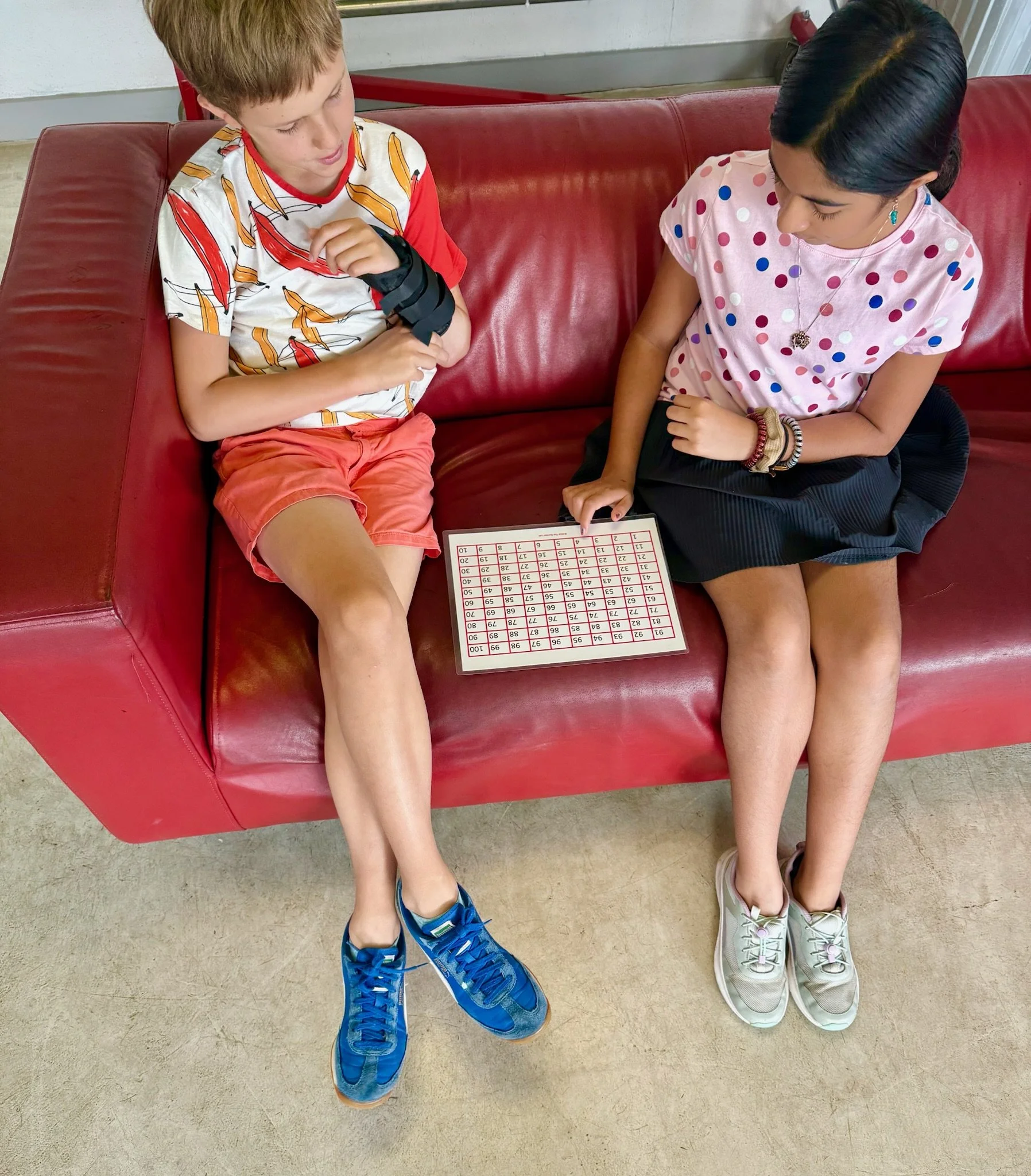
2. Inspire change and flexibility. We put everything on wheels. Literally. The room is agile, and students are regularly asked to reconfigure it for different activities. Materials are open and available: no locked cabinets, no "ask permission first." Storage itself communicates that this is communal territory. There's no front of the room. Seating varies in type and height. And we kept furniture minimal on purpose, because clutter chops up flow, and openness is what lets movement and gathering happen.
Showcase Math as a Creative Discipline in Your Classroom Design
We wanted the room to look like the discipline it teaches—messy, generative, alive—not like a place where answers get delivered and copied down.
Light matters. We reduced artificial lighting and opened up sightlines between indoor and outdoor space wherever we could. (We were lucky that our building has large windows and few hallways.)
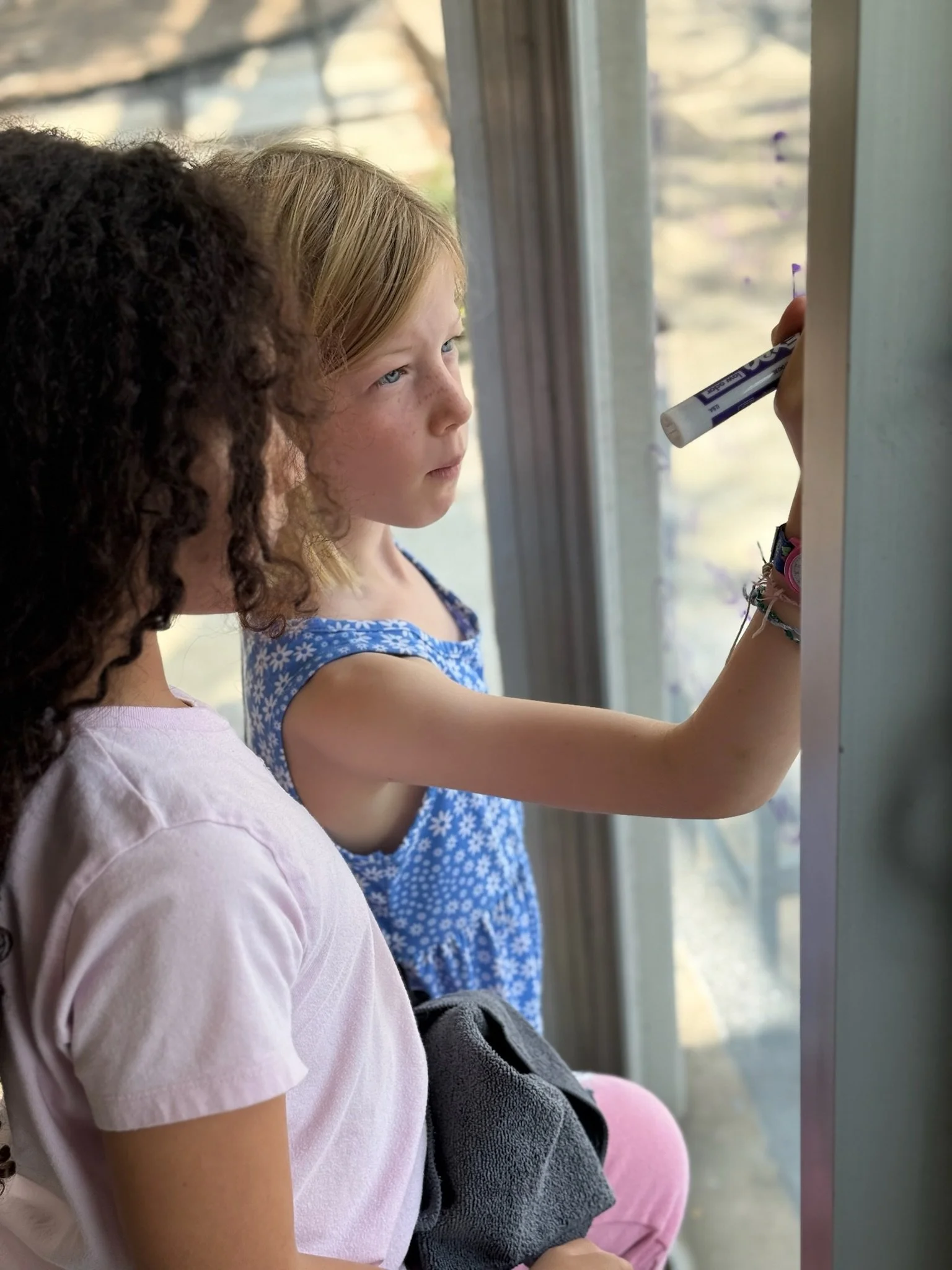
Writable surfaces everywhere. Whiteboards are floor-to-ceiling or mobile, plentiful, and as unbounded as we can make them. Walls stopped being separators and became part of the learning itself: the goal is to make thinking visible, and make thinking the work of students, not answer-getting.
Unconventional materials. We favor unexpected shapes and materials that spark curiosity, and where we can, students help build the furniture or make decisions.
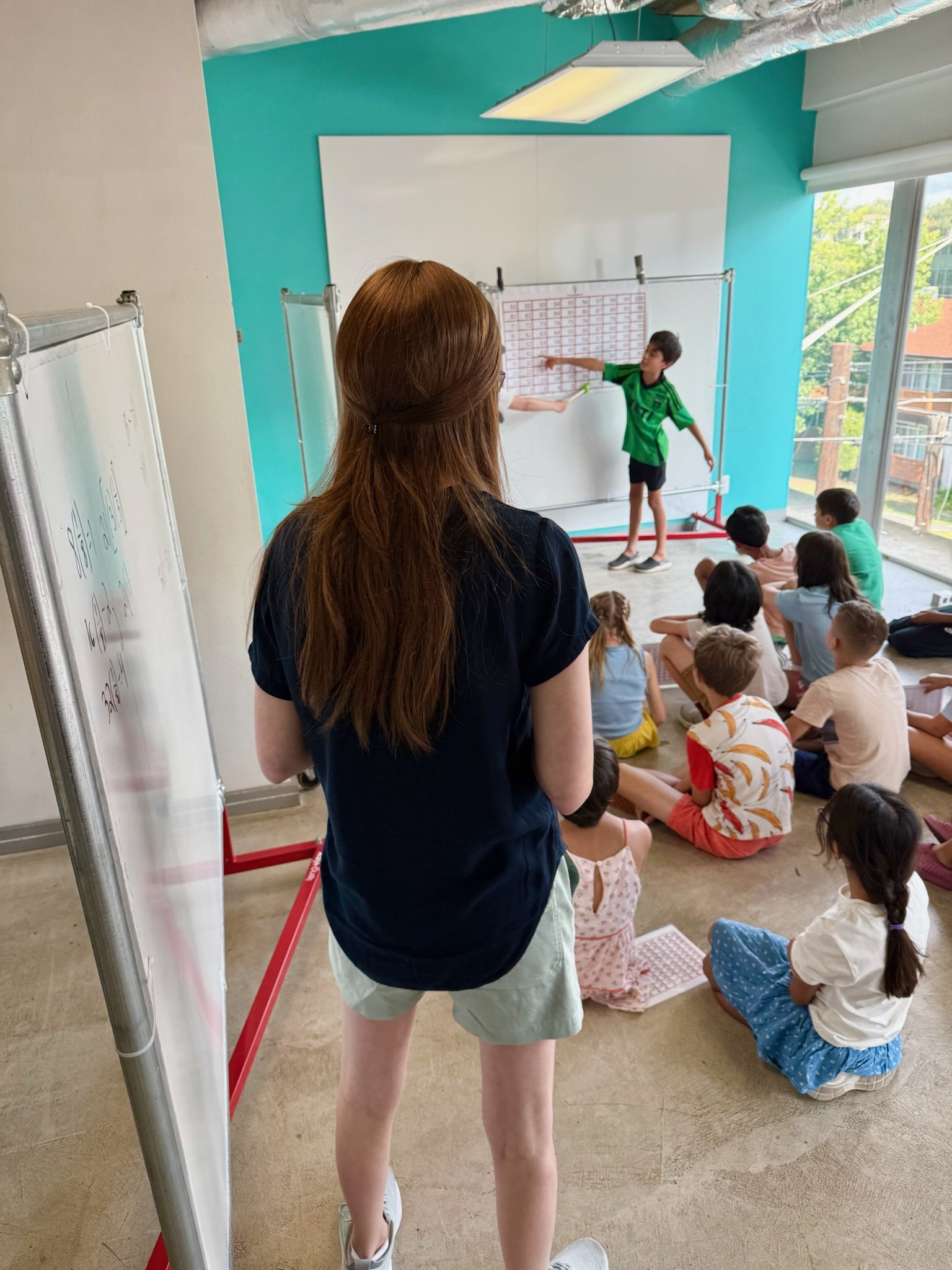
Movement is designed in, not fought. Minimal seating, appealing writing walls, tables you stand at, whiteboards you stand in front of—all so kids get up, huddle, and try the math rather than staying seated and passive.
Transparency and collaboration. Since peer review is woven into everything, we need clear sightlines across the room and enough whiteboard real estate for partnerships to show their work to others.
A workshop feel, not a classroom feel. Tools are radically accessible, with both obvious and unintended uses. We want students hacking materials, not just using them as instructed.
A living, unfinished room. By the time the year is underway, the walls should show remnants of real work—anchor charts, in-progress ideas—nothing that looks "perfect" or done. Math on the wall should look like a draft, because it is one. And every day, we reset the room to neutral. We want invested owners, not entitled users.
What We Would Never Do
Create kitschy, themed bulletin boards
Spend our summer decorating instead of preparing to teach
Hang posters that aren't remnants of actual recent learning
Settle for a single whiteboard in a room
Let the whiteboard become the teacher's exclusive domain
Overfill the room with furniture
Choose one "correct" furniture arrangement
Store computers or calculators in the room—they get in the way of communicating and working deeply together
Math Classroom Design Ideas You Can Copy Tomorrow
You don't need a design team or a renovation budget to start—these are the same first steps we walk teachers through at The Number Lab.
Keep the room radically simple. Resist the arms race to over-decorate.
Remove your desk. Reframe the room as shared, communal space.
Use the least amount of furniture you can manage.
Spend prep time deepening your own math knowledge and thinking about how ideas connect—not decorating.
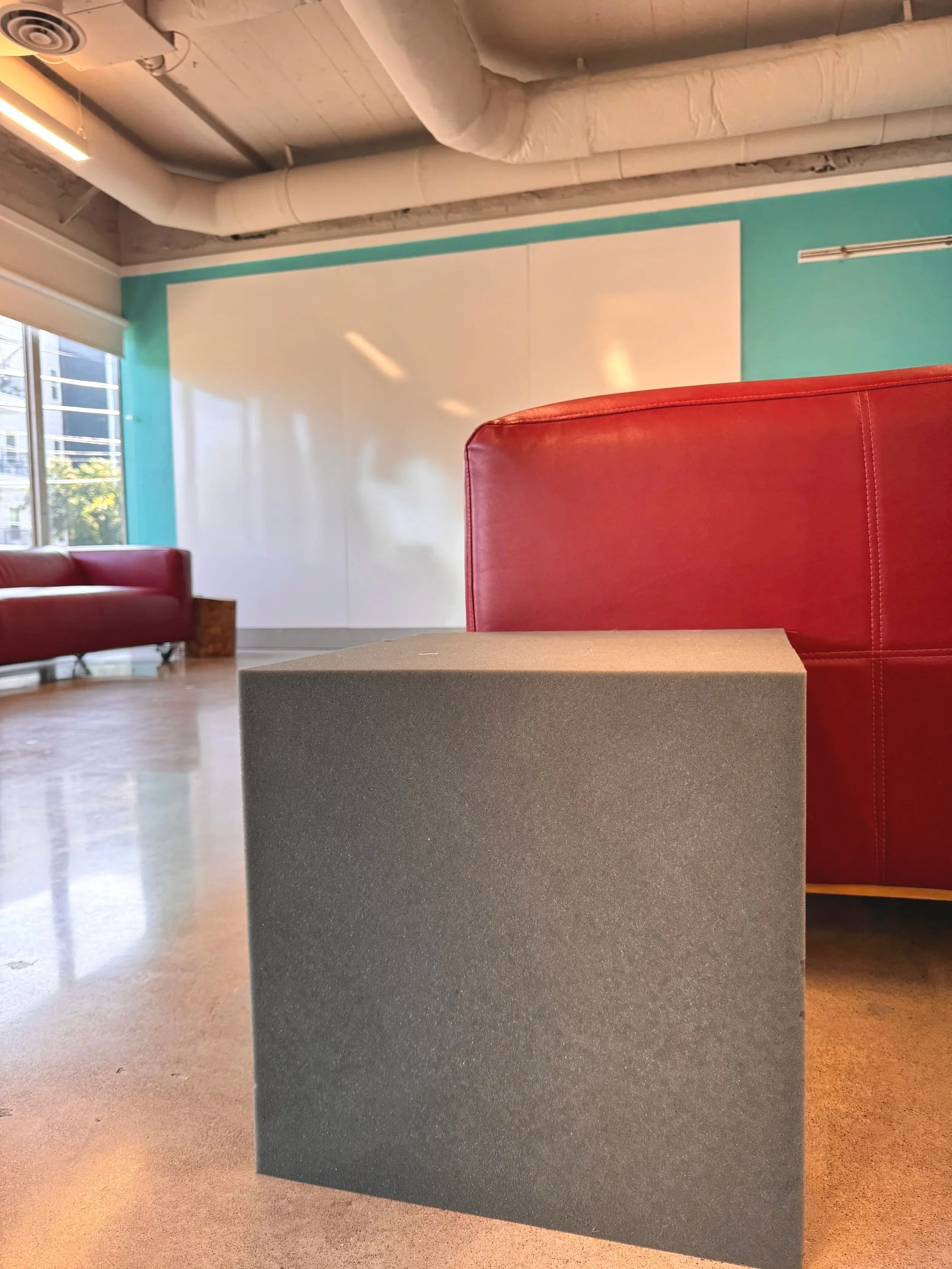
Add comfortable, mobile seating (we like sofas on wheels, foam cubes, the floor, and stools).
Build rolling whiteboard racks—we call ours "z-racks," borrowed from Stanford's d.school—or whiteboard walls of your own (all you need is some showerboard and industrial Velcro from a home renovation store).
Store materials openly, in bins, where students can reach them without asking.
Reset the room at the end of each day so it's ready to begin anew.
None of this requires a new building. It requires deciding what you want the space to say—and then making sure nothing in it says otherwise.
If you'd like help thinking through what your own classroom is telling students and how it is connected to the culture of your math classroom, that's exactly the kind of work we do at The Number Lab—consulting with innovative schools and math teachers eager to support a high-level mathematics environment.